When people ask, does record sealing remove court records online in Nevada, they are rarely asking out of curiosity. They are usually staring at a screen, watching their past appear in search results, and wondering whether a sealed case will still show up tomorrow.
That pressure is especially intense when a background check is coming for a job, housing, or a professional opportunity. The fear is not just embarrassment—it is losing access to a future you have worked hard to rebuild.
Nevada provides meaningful relief through record sealing, but online court visibility is a separate problem with its own timing, systems, and exceptions. Understanding how the process actually works is how you protect yourself from false assumptions.

Does Record Sealing Remove Court Records Online in Nevada?
In most situations, sealing is intended to remove eligible case information from public-facing court access. When done correctly, records prohibits access by the general public, and the record should no longer be visible through ordinary public portals and searches.
However, “online” is not a single place. Court portals, clerk systems, third-party websites, and private databases each behave differently, and they do not update on the same timeline. The safest answer is this: criminal record sealing can remove records from public court access, but it does not guarantee that every online trace disappears immediately—or without follow-up.
A seal begins with the court, but implementation often requires multiple agencies to process the order. If the court seals the case but a repository or agency has not yet updated, your record may still appear somewhere online for a period of time. This is why the record sealing process is not just getting a judge’s signature. It is a coordinated compliance project.
In Clark County, record sealing often involves coordination with the district attorney’s office process for stipulations and proper filing in the district court to cover multiple lower courts within the county. That matters because “online court records” in Las Vegas often reflect data from more than one court level, and partial sealing can leave confusing remnants visible.
The Difference Between “Court Portal Visibility” and a True Official Criminal History Report
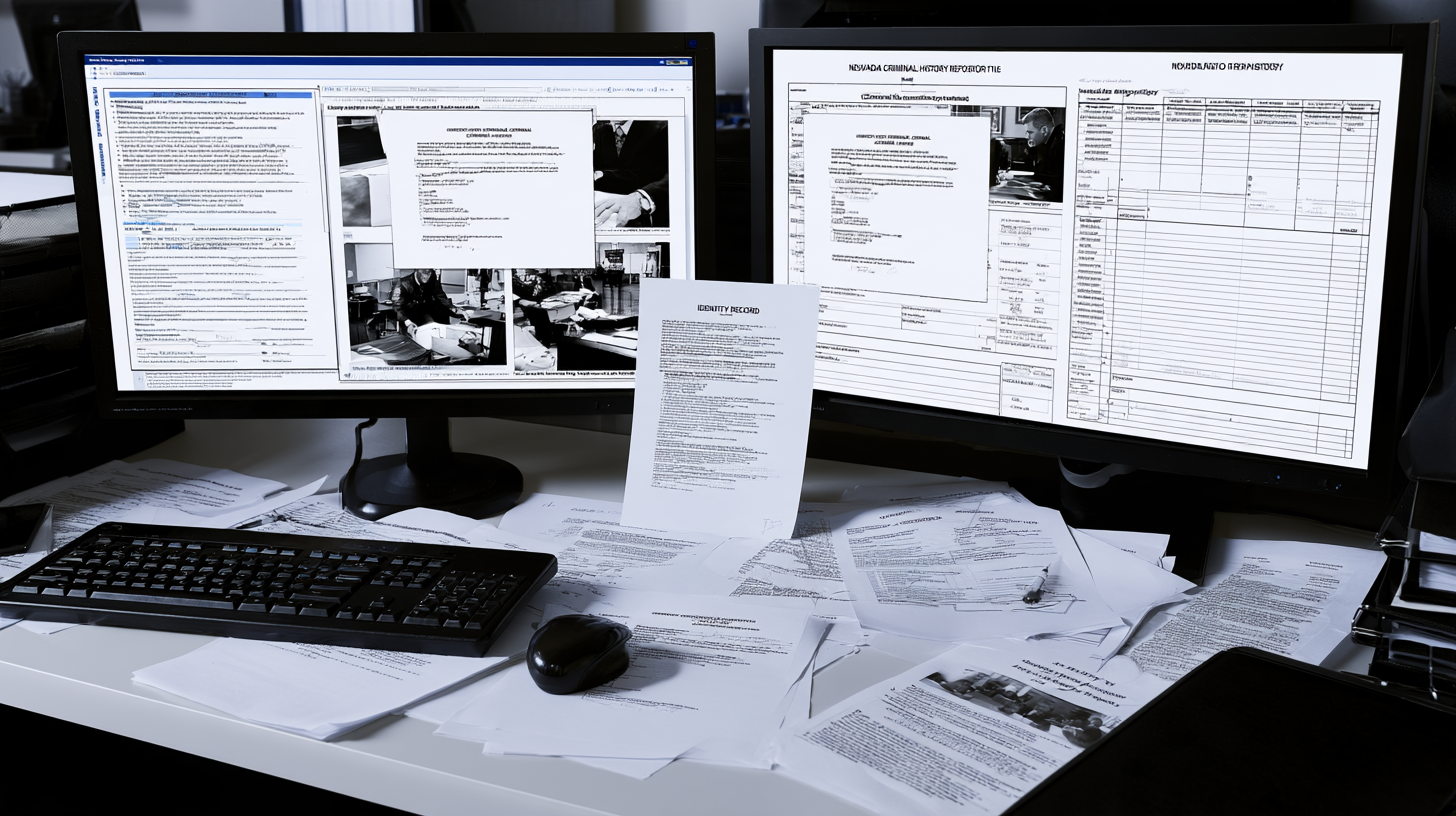
Many people focus on what they see online, but employers and agencies often rely on a criminal history report or an official criminal history report from state repositories, not only court portals.
Nevada’s system includes a state repository function, and record sealing restricts dissemination and access while still permitting limited internal use for record management purposes and other authorized functions. That means your online court visibility might change first, while a criminal history record pipeline updates later—or vice versa, depending on the case.
A docket entry can be misleading. It might show an arrest and filing, but not reflect the final disposition clearly. It may not capture that charges were reduced, that a case was dismissed, or that a conviction was later sealed. An accurate strategy starts with identifying what the state repository and agencies show, not only what a browser search returns.
Some online data persists because it was captured and republished by outside services long ago. Those services can continue displaying a snapshot even after the court’s system changes. This is why people sometimes see a case online after sealing and assume the seal “failed,” when the issue is actually third-party persistence.
The Court’s Role: When the Court Grants a Seal, What Changes First
Once a record sealing petition is approved and the court grants relief, the court enters an order. This order is the legal authority that triggers restrictions on public access and directs agencies to seal the record.
But courts operate with formal channels. If you do not complete the steps to distribute and confirm compliance, online court systems can lag. The best approach is to treat the order as the beginning of implementation, not the finish line.
The court clerk is often the gatekeeper for docket and document access within the court’s system. That is why filing in the appropriate court and using the correct case identifiers can determine whether a record disappears from public-facing access quickly or gets delayed. If your case spans North Las Vegas, Las Vegas municipal matters, justice court matters, or district court matters, those differences can affect how the online record is managed.
Some courts and counties use a stipulation process that can eliminate the need for a hearing if the paperwork is correct and the prosecutor agrees. That cooperation can shorten the time your record remains visible online, especially when timing is urgent for employment.
What Happens With Police Records
Court sealing does not only affect court dockets. It also impacts police records and arrest documentation.
The Las Vegas Metropolitan Police Department explains that an order sealing records removes records from general information sources but does not authorize destruction, and sealed records may still be used in certain circumstances. That statement matters because many people think only the court website needs to change. In reality, law enforcement data can be a separate visibility source.
If your criminal charges began with an arrest, there may be police reports and internal record entries connected to case numbers. Even when the court file is sealed, those law enforcement records must also be addressed through the sealing order’s distribution. When you see an online trace, it may be reflecting an agency entry rather than a court portal entry.
A law enforcement agency can possess records independent of the court docket. Sealing must reach those agencies through the order and compliance steps, or you risk uneven results. This is why sealing is not “one website.” It is a network.

The SCOPE Report and Verifying What Still Exists in the System
In Nevada, people often start with a scope report or a criminal history pull to identify what is actually being reported. This matters because records can include multiple charges, multiple arrests, and multiple dispositions. If you do not know exactly what is in the system, you can accidentally seal the wrong case entry or omit a related record.
Accuracy is not just legal formality—it is the mechanism that gets records removed from online sources correctly.
Online records often display simplified labels. If the underlying case disposition is unclear or incorrect, it can create the impression that a person was convicted when the case was dismissed, reduced, or resolved in another way. Getting the correct disposition into the sealing paperwork can prevent the sealed record from being misclassified in lingering databases.
Eligibility is controlled by statute, and the rules are heavily time-driven. Nevada record sealing often uses waiting periods, and the waiting period begins based on custody and supervision timelines.
If you have a criminal conviction, you generally must satisfy a statutory waiting period before filing. That timeline is often measured from release from custody or the end of a suspended sentence structure, depending on the category. If your goal is to remove online court records quickly, eligibility timing is the first gate.
Many people assume the waiting period starts at sentencing. In reality, the controlling date may be when you complete supervision, finish probation, or are discharged from sentence obligations. When you miscalculate, you file early, and the court can deny or delay the petition, leaving your record visible longer than necessary.
More serious categories can have longer waiting periods or additional restrictions. If your history includes a d felony, other felonies, or DUI-related offenses such as felony dui, the statutory analysis becomes more consequential. This is especially true when the offense implicates safety concerns that courts and agencies view through a public safety lens.
Disqualifying Offenses: When Sealing May Not Be Available
Not every offense can be sealed. Nevada legal service materials commonly summarize that certain categories, including some sexual offenses, felony DUI categories, crimes against children, and home invasion with a deadly weapon, are excluded.
If you are dealing with sex crimes, sexual assault, or other listed categories, you cannot assume online removal is possible through sealing. This is where experienced legal analysis matters most, because the wrong filing can waste time and create unnecessary visibility.
When statutes exclude certain offenses, courts cannot grant relief simply because a person needs it. That limitation is strict, and it affects how you plan employment and reputation strategies. If your record includes an excluded offense, your legal counsel may need to explore alternative relief options, including a court order for other forms of record management in specialized circumstances.
“Access Sealed Records”: The Exceptions That Explain Why Traces May Still Appear
Even after sealing, Nevada law allows access by certain parties and agencies in limited situations. NRS 179.301 describes inspection rules, including that the repository and employees may inspect certain sealed records and that access can occur for specified purposes, including internal administration and legally authorized searches. This is why “sealed” does not mean “nobody can ever see it.” It means the public generally cannot.
That distinction is critical when people interpret an online trace as “proof” that sealing failed, when the trace may be in a restricted system or a specialized portal.
Nevada’s own guidance emphasizes exceptions for repository employees, parties conducting an authorized search, and parties authorized pursuant to Nevada law or a court order. If your background screening involves a regulated role, government hiring, or a licensing process, you may still face lawful access even when the public cannot see the record online.
This is especially relevant for regulated employment or licensing. Even when court records are sealed from public view, certain agencies may have access in certain circumstances defined by statute. This is one reason professional advice is essential when your sealing goal is tied to career licensing or high-clearance work.

The Practical Reality of Online Visibility After Sealing
Sealing can remove records from general public court access. Yet online visibility can persist through old data captures, third-party reposts, and slow updates. The most accurate framing is this: sealing is a legal restriction, and online removal is the implementation outcome you must verify.
When sealing is done correctly, most people see real improvement, especially with most employers and routine screenings, because public sources no longer show the record. But the timeline and completeness depend on how well the process is executed.
A court may seal the file, but a portal may show a case number without documents until the system refreshes. Another system may still reflect a historical index until the agency processes the order. This is why a verified copy of the sealing order and proof of distribution matter. They give you the ability to respond when a record remains visible after the seal.
People often assume waiting will fix everything. Sometimes it does not. If the order did not reach a relevant agency or an identifier was wrong, the record can remain visible indefinitely. Sealing is not a passive solution. It is a process that must be verified.
Civil Rights and the Limits of What Sealing Changes
Nevada law addresses the legal effect of sealing, including that proceedings are deemed never to have occurred for many purposes and that certain civil rights can be restored in the sealing statute framework.
This is why sealing is not only about online records. It can be about reclaiming civil rights, including rights like the ability to vote and hold office in many contexts. Still, sealing has limits. The law includes exceptions for access and does not automatically resolve every collateral consequence for every profession.
People pursue sealing because it affects housing, work, and dignity. Online court records can be weaponized by strangers, competitors, and even casual searches by employers. Sealing is the legal tool Nevada provides to stop that cycle, but only when the person is eligible and the process is properly completed.

FAQ
Can sealing remove online records in Clark County and Las Vegas court portals?
In most cases, yes—once the court seals the matter, the public-facing case access should be restricted, and the record should no longer be available as a public court file, although system updates can take time and must be implemented correctly across courts and agencies.
What if my sealed record still shows up in a background check?
If a sealed record appears in a background check, it may be an outdated database issue or incomplete implementation, and you may need to use your verified copy of the sealing order and confirm agencies received and processed the order to correct the reporting.
Is there a waiting period to seal court records online in Nevada?
For many convictions, yes—the waiting period depends on the offense category and sentence structure, and timing can hinge on completion of custody or a suspended sentence, so filing early can delay relief and prolong online visibility.
Conclusion
If you’re asking, “Does record sealing remove court records online in Nevada?” the honest answer is: record sealing is designed to remove eligible records from public-facing access and restrict dissemination, so the general public is prohibited from viewing the sealed record. Nevada guidance explains that sealed records may be removed from certain record systems and that dissemination becomes substantially limited or altogether restricted—even though the record is not destroyed.
But online removal isn’t automatic everywhere. Court portals, law enforcement systems (including Las Vegas Metropolitan Police Department records), state repository databases, and third-party background check sites can update on different timelines—and some may not update unless they receive the correct notice and documentation. That’s why a successful sealing plan typically depends on: accurate eligibility under the applicable NRS requirements, a properly prepared record sealing petition, a clear order sealing records, and thorough follow-through with every agency and system that may still be reporting the record.
Ready to stop guessing and start clearing your record the right way?
Our team can review your history, confirm eligibility, identify every reporting agency, and guide the process from petition to follow-through—so your sealing actually shows up where it matters. Call today to schedule a confidential Nevada record sealing consultation and take the next step toward a cleaner background and a fresh start.