A record sealing denial can feel like the court just shut the door on your future. You did the paperwork, you waited, you showed up—or you mailed everything in—and still the judge said no.
That reaction is human. A conviction record or visible criminal records can affect employment, housing, and dignity in ways that are hard to explain to anyone who hasn’t lived it. But a denial is not always a final answer. Under Nevada law, many denials are fixable. Some are timing issues tied to the waiting period. Others are documentation problems in the record sealing process. And some require a different form of relief entirely.
This guide explains record sealing denied nevada what to do next, how to understand the reason, and what options you may still have under the Nevada Revised Statutes.
What a Nevada Record Sealing Denial Actually Means
A denial usually means the court believes one or more eligibility requirements were not met, or the petition package did not comply with procedural rules. In many cases, the judge is not saying you will never qualify. The judge is saying you did not qualify on the date you filed, or the court cannot grant the request based on the information submitted.
That distinction matters because the next step is not guesswork. The next step is to identify whether the issue is timing, paperwork, jurisdiction, or a statutory disqualifier.
When a judge denies sealing, the court is applying a statute, not scoring your character. It is a legal decision bound to the record, the offense category, and the filing. That can still feel unfair, especially if your case was old, the harm was limited, or you have rebuilt your life. But it also means the problem is often solvable through legal precision.
Nevada’s waiting periods for sealing after conviction are spelled out in statute and frequently measured from release from actual custody or discharge from probation or parole, whichever occurs later, in many categories. If the waiting period was miscalculated, the court can deny without prejudice, meaning you may be able to refile when the required time has passed.
The Most Common Reasons Record Sealing Gets Denied in Nevada
Most denials fall into a small number of categories. Once you locate which category applies to you, your path forward becomes clearer. The key is to treat the denial like a legal roadmap. Courts usually reveal the problem in the written order or minute entry.
Nevada’s waiting periods vary by offense level, and some categories—like certain misdemeanor DUI and domestic violence batteries—use longer waits and a different “later of” calculation tied to being no longer under a suspended sentence. A person may think the clock started at sentencing, when the statute actually measures from release from custody or discharge from supervision. If your case involved a probation officer, probation extensions, or a late “honorable discharge,” the timeline may be different from what you assumed.
Nevada sealing procedures can depend on where the case was prosecuted and where the criminal case records live. In Clark County, a person may need to address municipal, justice, and district court records correctly—especially if multiple agencies were involved.
If you filed in the wrong court, the judge may deny because the court lacks authority over part of your record, even if you are otherwise eligible. When the denial is procedural, it is often correctable with proper filing and routing.
Courts often deny when the submitted documents do not match the case history. That includes missing dispositions, incorrect statute numbers, or unclear labeling of charges. If the order does not identify the correct records, the court may be unwilling to enter a sealing order that could be implemented incorrectly. This is where small errors create big consequences—because sealing affects multiple agencies.
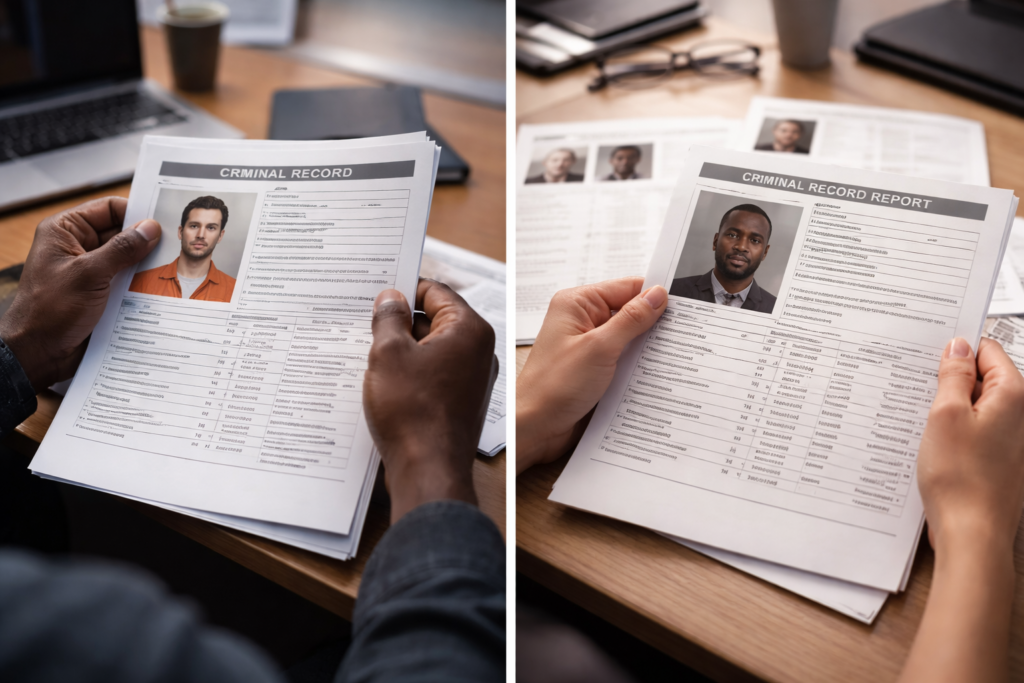
Nevada guidance commonly emphasizes obtaining a current, verified criminal history record before preparing a petition and order. If the central repository history is missing, outdated, or incomplete, the court may deny because it cannot confirm that all cases and dispositions are properly accounted for. An outdated record can also hide multiple convictions that change eligibility.
Some offenses are not eligible for sealing under Nevada statutes or have strict limitations that effectively block sealing in many cases.
If your history includes sexual offenses, sex crimes, or offenses with continuing registration requirements, the denial may reflect a statutory prohibition rather than a fixable paperwork issue. When the denial is based on an excluded category, the “next step” may not be refiling—it may be exploring different relief.
Some courts consider prosecutorial input during the sealing process, including whether the district attorney opposes the petition.
Even when the statute allows sealing, objections can influence how a judge evaluates the record through a public safety lens, particularly where the offense involved violence or vulnerable victims. A denial tied to public safety concerns often requires a stronger legal presentation, not just corrected forms.

Confirm Eligibility Under Nevada Statutes Before You Refile
Before you file again, confirm eligibility under the exact statute category. That means matching the offense level, the disposition, and the waiting period rule.
Under NRS 179.245, different offense categories carry different waiting periods, and many are measured from release from custody or discharge from supervision, whichever occurs later. If you are even slightly uncertain about the timeline, that uncertainty will eventually become a denial.
Many people mix up arrest-based sealing and conviction-based sealing. If the case was dismissed, or you were acquitted, the sealing path may be very different than a conviction-based petition.
If you filed as if you had a conviction when your case was dismissed, or vice versa, the paperwork may not have fit the court’s requirements. A denial can be a sign that your filing strategy did not match your true disposition.
With multiple convictions, the longest waiting period may control, and different cases may become eligible on different dates.
If you try to seal everything together, but one case is not eligible, the court may deny the entire petition or deny the ineligible portion. This is why the “one petition equals one outcome” assumption can be dangerous.
Fixing the Waiting Period Problem When It Causes Denial
When timing is the issue, the solution is often straightforward—once you know the true start date.
Nevada’s statute repeatedly uses “release from actual custody” or “discharge from probation or parole,” and for certain categories it uses “no longer under a suspended sentence,” whichever occurs later. That language is not academic. It is the legal difference between eligible and denied.
People often use the phrase honorable discharge or “honorably discharged” to describe completing probation successfully. If the court’s denial implies you are still under supervision, confirm whether the court has entered an order of discharge or whether supervision was extended after a violation.
If a probation officer’s file reflects a different end date than the court record, that inconsistency can trigger denial.
Some cases involve a suspended sentence structure that continues until supervision ends. In those categories, the waiting period begins when you are no longer under that suspended sentence, not necessarily when you leave jail. A denial for waiting period reasons is often resolved by recalculating the correct eligibility date andrefillingg at the proper time.
Fixing Document Errors That Trigger Denial
If the judge denied because the filing was incomplete, your next move is to rebuild the petition package like a litigation file.
This is where an attorney can be the difference between another denial and a clean approval, because missing one required item can derail the entire request. The goal is a package that allows the court to grant relief confidently.
Courts rely heavily on the final disposition. If the disposition is unclear, contradictory, or missing, the judge may deny.
If your record includes amended charges, reduced charges, or multiple counts, make sure the petition mirrors the case disposition exactly. Even the difference between a misdemeanor and a gross misdemeanor can change the waiting period category.
Nevada sealing is statute-driven. If your petition references the wrong statute, the wrong charge, or the wrong case number, the court may deny.
This is common when a person tries to seal old cases that were moved between courts or renumbered after appeal. Correct identifiers are also crucial for agency compliance after approval.

If the Prosecutor Opposed Your Petition: What That Usually Means
If the district attorney opposed the sealing request, the opposition may have been procedural, factual, or policy-based. Sometimes prosecutors object because the petition omitted a case, mischaracterized the disposition, or failed to meet statutory timing.
Other times, the objection is tied to public safety concerns or the nature of the offense. Either way, you cannot treat a prosecutorial objection as “just paperwork.” It becomes part of the judge’s risk analysis.
When the judge cites public safety, the court may be signaling that the case history raises concerns beyond the waiting period.
A stronger petition often includes proof of completion of sentence terms, stable employment, and evidence of rehabilitation, presented in a legally appropriate way. If the judge denied based on risk factors, the next attempt should be built like a persuasive legal argument, not a resubmission.
Can You Appeal a Record Sealing Denial in Nevada?
Some denials can be challenged, but appeals are not always the most efficient route. Often, the practical choice is to correct the defect and refile rather than pursue an appeal that may take longer than the waiting period itself.
Still, if the denial reflects a clear legal error—like the judge applying the wrong waiting period category—an attorney may recommend a motion for reconsideration or a structured challenge within the court’s rules. Your best option depends on the denial reason, the urgency of relief, and the court’s language.
If the denial is based on missing documents, wrong jurisdiction, or incorrect case listing, refiling can be faster than an appeal.
The key is to ensure the corrected petition is truly complete before it is filed again. A second denial is often a sign that the underlying reason was not understood.
If you are facing licensing deadlines, immigration consequences, or a job offer that cannot wait, a denial is not something to navigate alone. A short consultation can clarify whether the denial is curable now, curable later, or requires alternative relief.

FAQ
Are sexual offenses automatically disqualifying for record sealing?
Some sexual offenses and cases with ongoing registration requirements are excluded or restricted under Nevada statutes, so eligibility depends on the exact statute and disposition, not just the general label of the offense.
If my sealed record can still be accessed, what is the point of sealing?
Sealing generally removes records from public access and routine screening, but Nevada guidance explains sealed records are not destroyed and may be used later in certain circumstances, including by agencies authorized by statute.
Does a denial mean I can never restore my rights?
Not necessarily—many denials are timing or paperwork issues, and Nevada resources commonly emphasize that certain civil rights can be restored after sealing, while firearm rights generally require a pardon.
Conclusion
A record sealing denial is painful because it keeps your past close to the surface, especially when a potential employer or licensing agency can still see a criminal history entry you hoped to leave behind. But Nevada sealing is a statute-driven process, and many denials are not permanent. The court may have denied because the waiting period was not met, the filing was incomplete, the wrong jurisdiction was used, or the offense falls into an excluded category that requires a different solution.
Relief is still possible for many people—sometimes through a corrected sealing petition, sometimes by waiting for eligibility, and sometimes through other options like a set aside or a pardon when sealing is not available or when only a pardon can restore the specific right you need. If you received a denial and you want a real plan instead of more uncertainty, schedule a confidential consultation, contact a Nevada record sealing attorney, and get personalized guidance based on your exact conviction history, court records, and the fastest lawful path to relief.