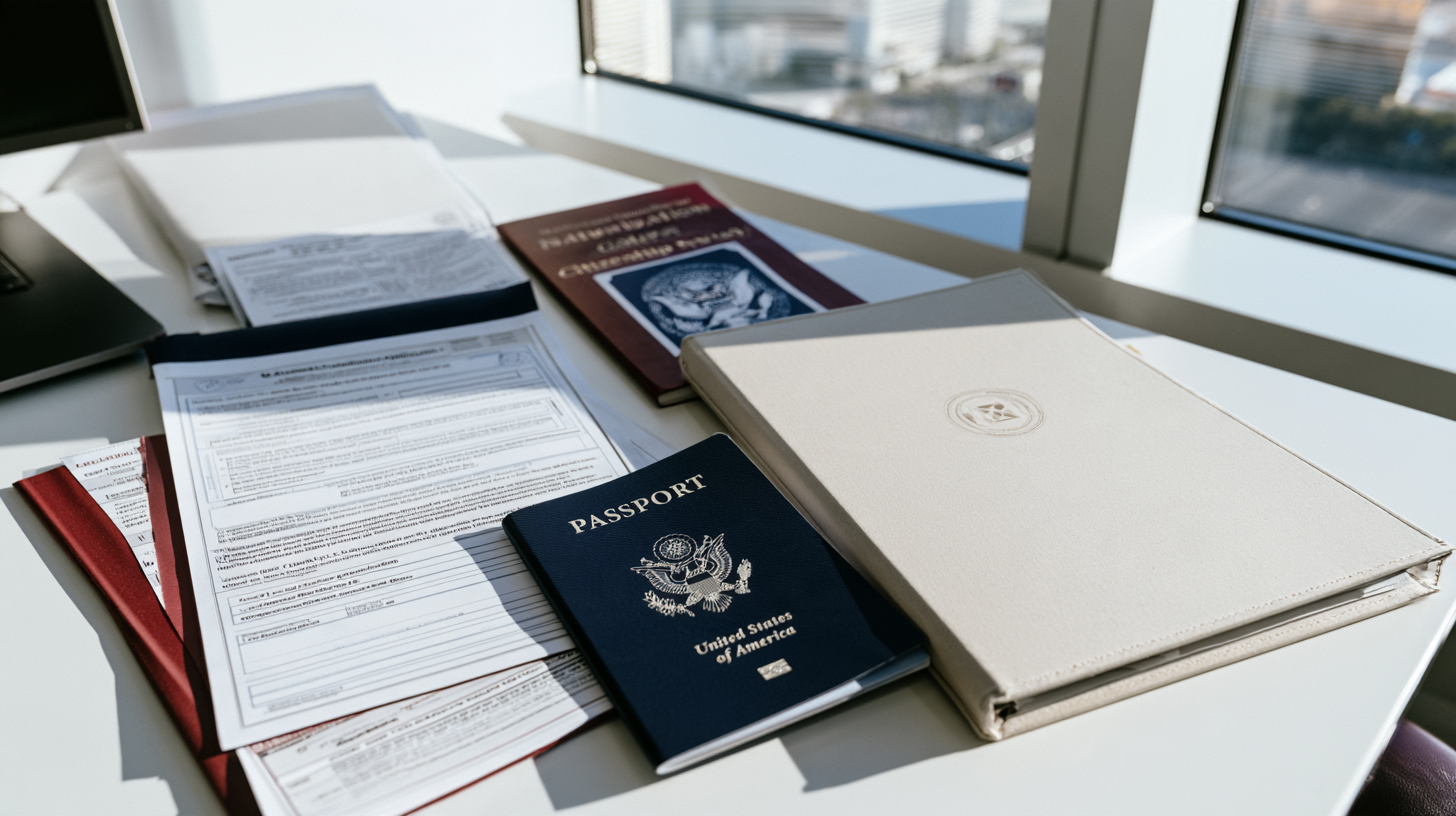
Insurance is one of the easier fields to enter in Nevada. The pre-licensing course takes days rather than years, the exam is passable with study, and agencies in Las Vegas and Reno hire steadily for insurance sales and claims adjusting. That accessibility is why so many career changers land here after leaving hospitality, retail, or construction.
Then the application asks about your criminal history, and the ground shifts underfoot. A Nevada insurance license criminal record question runs through two layers at once: a federal prohibition written specifically for the insurance industry, and the Nevada Division of Insurance with its own character review.
The federal bar is stricter than what most licensed trades face and considerably narrower than what most applicants fear. Knowing which side of that line your conviction falls on decides everything that follows, including whether record sealing changes the answer. What follows maps both gates, the consent process that exists for the harder cases, and where a sealing petition fits.
Two Authorities Review the Same Conviction Under Different Standards
Nevada licenses insurance producers, adjusters, and related roles through the Nevada Division of Insurance, part of the Department of Business and Industry. Producer licensing sits in NRS Chapter 683A, and the grounds for action are in NRS 683A.451. That section lets the Commissioner deny, suspend, revoke, or refuse to renew a license for “conviction of a felony or a crime which involves theft, fraud, dishonesty or moral turpitude.”
Read that clause carefully, because it is broader than the federal one you will meet in the next section. It reaches a felony of any kind, and separately reaches a crime involving theft, fraud, dishonesty, or moral turpitude without limiting that second category to felonies. A misdemeanor theft is within it. The same section also makes providing incorrect, misleading, incomplete, or partially untrue information on an application its own independent ground, which is worth holding onto before you decide how to answer a disclosure question.
Federal law adds a second gate that has nothing to do with Nevada. A criminal statute in Title 18 of the United States Code bars a person convicted of certain felonies from engaging in the business of insurance without written consent from a state insurance regulator, and the prohibition applies nationwide to anyone whose work affects interstate commerce. That description covers almost every licensed producer in the country.
The two reviews run on different logic. The division weighs your record against fitness for licensure and may approve an applicant carrying a felony conviction. The federal prohibition operates without discretion at the front end, so a covered record keeps you out of the business until a regulator grants written consent, regardless of whether Nevada would have licensed you.
Applicants routinely clear one gate and stall at the other. A person can satisfy the division’s character review and still need federal written consent before an agency can put them on the payroll, which is why understanding the sequence keeps an application from failing at the final step. The same logic governs record sealing and professional licenses across Nevada.

The Federal Bar Covers Far Less Than Most Applicants Assume
The federal prohibition in 18 U.S.C. 1033(e) is narrower than the state ground in one important respect and harsher in another. It reaches a conviction of “any criminal felony involving dishonesty or a breach of trust,” or a conviction under section 1033 itself. Two things follow. A misdemeanor, however dishonest, is outside it, which is not true of the Nevada ground. And money laundering is not separately enumerated, unlike the parallel banking prohibition in Section 19, so a money laundering conviction reaches 1033 only if it qualifies as a felony involving dishonesty or breach of trust on its own terms.
The consequences are criminal rather than merely administrative. A prohibited person who engages in the business of insurance affecting interstate commerce without written consent faces a fine, imprisonment of up to five years, or both, and an insurer that knowingly permits the participation faces the same exposure. That is why carriers and agencies treat the question as non-negotiable: the company is exposed alongside the individual.
That definition rules out a great deal. A misdemeanor conviction of any kind falls outside a bar written around felonies, and a DUI, a battery charge, a drug possession case, and most public-order offenses do not involve deceit or a violated position of trust. Applicants with those records frequently assume insurance is closed to them when the federal statute never touched their case at all.
Convictions that do trigger it share a common thread. Fraud, embezzlement, forgery, identity theft, theft by deception, and perjury all involve misrepresentation or the abuse of a trusted position. Insurance runs on handling other people’s money and other people’s claims, which is why Congress drew the line exactly there.
The gray zone sits around theft. Whether a specific theft conviction counts as a crime of dishonesty depends on how the charge was written and what the disposition reflects, so a shoplifting case reads differently than a conversion of client funds even where Nevada labeled both as theft. Anyone in that position should look at sealing theft and burglary records in Nevada before assuming the worst.
A pending charge is not a conviction, and a case that ended in dismissal or acquittal is not one either. Nevada allows those cases to be sealed under NRS 179.255 with no waiting period, which removes them from the reports the division and your employer will pull.
Why the State and Federal Clocks Run Differently
Age of the case matters to the division even where it does not move the federal line. A fraud conviction from three years ago and the same charge from fifteen years ago present very differently to a reviewer weighing character and fitness, particularly alongside steady work and no new contact with the courts.
The federal statute does not soften with time on its own. An older covered felony still routes through written consent, while carrying a considerably stronger argument once it gets there. Applicants who treat the two timelines as one end up planning around the wrong deadline, which is among the most expensive mistakes in this area.
The Written Consent Application and What It Asks of You
An applicant whose conviction falls inside the federal bar may ask an insurance regulatory official authorized to regulate the insurer for written consent, and the statute requires that the consent specifically refer to subsection (e). In Nevada that request goes to the Commissioner of Insurance through the Division’s Producer Licensing Section, which maintains a written consent process with two paths. A Short Form application allows an initial expedited determination; a Standard Form is the fuller submission, and the Commissioner may require it after reviewing a Short Form. Each has its own checklist, and a probationary insurance license report may be required as well.
What the submission has to contain is more than a copy of the judgment. The Division’s forms call for financial and credit history alongside the details of the conviction, evidence of rehabilitation, past and proposed employment, and a full explanation of the grounds relied on in seeking consent. That is a rehabilitation package rather than a form, and it is the same kind of showing a sealing petition builds, which is one reason the two projects are worth running together.
The submission works as a rehabilitation showing rather than a form-filling exercise. Certified court records for every case, proof the sentence and any restitution were completed, employment history since the conviction, letters from people who can speak to your character, and a written statement in your own words all belong in the package. The regulator is being asked to take a considered risk on you, and the file has to give them something specific to point to.
Sequencing matters more than applicants expect. Some people file the consent application before applying for the license, some file after a conditional offer from an agency, and the right order depends on how much time you have and what your insurance license background check will return. An agency that has already interviewed you will often wait if it understands the timeline.
Consent is discretionary and specific in scope. A grant may be limited, and it does not eliminate the division’s separate character review of your producer license application. Nothing about a consent grant assures the division will approve you, and nothing about a licensing approval satisfies the federal statute. The question of getting a professional license with a sealed record turns on exactly this overlap.
Anyone building this file should get help with it. A denied consent request is harder to repair on a second attempt than to get right the first time, and a Las Vegas record sealing attorney who understands both the sealing statutes and the licensing side can keep the two tracks aligned.

Renewal Review When a New Charge Arrives Mid-Term
Existing licensees face a different version of this problem, and the deadline is short. Nevada licensees are required to report criminal convictions and administrative actions to the Division within 30 days, and failing to do so is itself a basis for discipline. That obligation runs independently of the renewal cycle, so waiting until the next renewal to disclose a conviction converts a reportable event into a reporting violation stacked on top of it.
The federal statute does not pause for existing licensees either. A licensee who picks up a covered felony conviction falls inside the prohibition while holding an active license, which creates an immediate problem for both the licensee and the agency employing them.
Someone in that position has more moving parts than a new applicant does. The criminal case, the reporting obligation, the license renewal, and any written consent request all interact, and a plea decision can foreclose options on the licensing side before anyone notices. Getting advice on both at once is the difference between a manageable problem and a lost career.
Sealing an older case can also help the picture, and record sealing has a role in restoring a professional license in Nevada. Adjusters, bail agents, and other regulated roles sit under the same division with their own requirements, and the two-layer analysis holds across all of them.
Sealing an Eligible Record Before the License Application
Sealing changes what the background check returns and what you are entitled to say on the application. Under NRS 179.245, a misdemeanor conviction becomes eligible one year after the case closes, a gross misdemeanor after two years, a category E felony after two years, and many category B, C, and D felonies after five years. Cases dismissed or acquitted seal immediately under NRS 179.255, and charges never filed may be cleared without delay, so check how long you have to wait to seal a record in Nevada for each entry.
Start with the SCOPE report. It shows what the state recorded rather than what you remember, and applicants find surprises there often enough that skipping it is a poor bet: old arrests, incorrect dispositions, and cases believed dismissed that show a conviction instead.
Under NRS 179.285 a person with a sealed record may answer questions about criminal history as though the case never occurred, while NRS 179.301 keeps a short list of agencies’ access open. Here the answer is unwelcome and worth stating plainly: the Division of Insurance is on that list. NRS 179.301 expressly preserves the Division’s ability to inspect sealed records for the purpose of determining eligibility for an insurance license, where the sealed event relates to insurance. Insurance is one of only two industries, alongside gaming, that Nevada singled out for this treatment.
That does not make sealing pointless in this field; it changes what sealing accomplishes. Sealing still removes the case from the commercial background reports an agency or carrier buys, and it still supports a rehabilitation showing. What it does not do is take the record away from the regulator that decides your license.
The federal question runs on a separate track and, on the face of the rule, comes out better. Section 1033 does not contain the express sealing exclusion that the banking rules do, so a sealed record does not automatically remove a person from prohibited-person status the way it can under Section 19. The safe course for anyone whose conviction was a felony involving dishonesty or breach of trust is to seek written consent regardless of the sealing order rather than to assume the federal bar dissolved with it.
Federal treatment is the harder question, and it deserves a direct answer rather than an optimistic one. A Nevada court’s order binds Nevada agencies, and federal databases operate under federal rules, so whether sealed records show up on federal background checks depends on how the original case reached the federal system. An applicant relying on sealing to escape the federal bar needs that analysis done before filing anything.
A felony conviction for fraud or embezzlement is precisely the profile the federal statute was written for, and felony record sealing is a longer process than sealing a misdemeanor. Where sealing is unavailable, a Nevada pardon is a separate form of relief with its own process and its own effect on licensing questions.

Frequently Asked Questions
How Does a Nonresident Insurance License Work With a Conviction?
A producer licensed in another state who applies for a nonresident Nevada license brings their home-state record along, and the Nevada application asks about criminal history the same way a resident application does. A Nevada court can only seal a Nevada case, so a conviction from the home state has to be addressed under that state’s own relief laws, and the federal bar applies across state lines regardless of where the license is issued.
Can I Own an Insurance Agency With a Past Conviction?
The federal prohibition reaches participation in the business of insurance rather than employment alone, which means ownership and management roles fall inside it. A person barred from working as a producer is equally barred from running an agency without written consent, so anyone planning to buy or start an agency should resolve the consent question before signing anything.
Will Sealing My Nevada Conviction Remove the Federal Bar?
That is the central open question and it should be answered for your specific case rather than from a general rule. Nevada offers sealing rather than expungement, a Nevada order binds Nevada custodians, and how federal authorities treat a sealed state conviction depends on the statute’s own terms and on how the case was reported, which is why anyone relying on sealing to clear the federal gate needs that analysis completed before filing.
Conclusion
An old case does not automatically end an insurance career in Nevada. The federal prohibition reaches felony convictions involving dishonesty or breach of trust, which means misdemeanors of every kind, DUIs, drug possession cases, and most public-order offenses sit outside it entirely. A great many applicants who never apply would have cleared the federal gate without doing anything.
For the records that do fall inside, relief exists rather than a permanent exclusion. Written consent is a real and regularly granted remedy, built around documented rehabilitation, completed sentences, restitution paid, and a work history that speaks for itself. The state character review runs alongside it and is capable of approving an applicant with a felony on the record.
What decides most outcomes is sequence and accuracy. Pull your own record before a regulator does, establish which gate your conviction implicates, seal what Nevada law allows you to seal, and build the consent file properly the first time. Eligibility depends on the charge, the outcome, and the waiting period, and no two records line up the same way.
Nobody can promise how a regulator will rule on a discretionary request. What a sealing petition does is change the record on which that ruling gets made, and it improves every other screening in your life at the same time. Schedule a confidential consultation with Record Sealing Nevada to review your record and plan the sequence before an application goes in. Contact a Nevada record sealing attorney for personalized guidance on your specific criminal record.